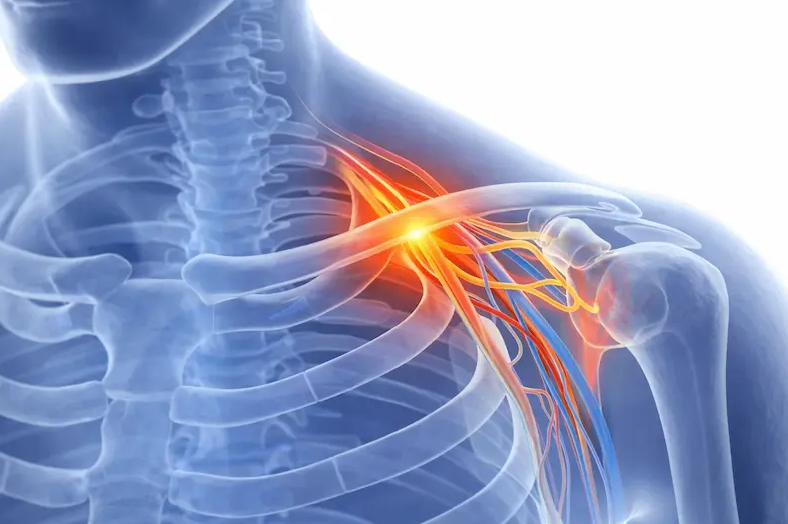
Thoracic Outlet Syndrome

Understanding Arm Pain, Numbness & “Heaviness” – And What You Can Do About It

At Rx Physiotherapy, we often see people who describe:

  • ⚡ Arm pain that doesn’t quite follow a nerve pattern

  • 🖐️ Tingling into the hand (often the little finger side)

  • 🏋️‍♂️ A feeling of heaviness when the arm is overhead

  • 💪 Weakness or fatigue during everyday tasks

  • 🌡️ Swelling or colour changes in rare cases

One possible cause of these symptoms is Thoracic Outlet Syndrome (TOS).

Let’s break it down clearly.


What is Thoracic Outlet Syndrome?
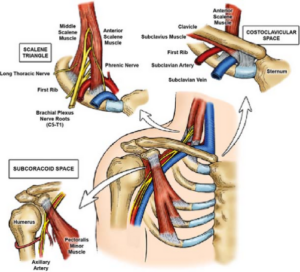
Thoracic Outlet Syndrome occurs when nerves or blood vessels are compressed as they travel from your neck into your arm.

The compression happens in a region called the thoracic outlet — the space between:

  • The collarbone

  • The first rib

  • Surrounding muscles (like the scalenes and pectoralis minor)

Three structures pass through this area:

  • The brachial plexus (nerves to the arm)

  • The subclavian artery

  • The subclavian vein

Depending on which structure is irritated, symptoms can vary.


The three types of TOS

🧠 Neurogenic TOS (Most Common)

This involves irritation of the nerves.

You may experience:

  • Tingling or numbness

  • Diffuse arm pain

  • Weakness in the hand

  • A heavy or fatigued feeling, especially overhead

💉 Venous TOS (Less Common)

This affects the vein.

Symptoms may include:

  • Swelling

  • Bluish colour changes

  • Tightness in the arm

🩸 Arterial TOS (Rare)

This affects the artery and may cause:

  • Cold sensitivity

  • Pale skin

  • Cramping or fatigue with activity

If vascular symptoms are suspected, urgent medical assessment is required.

Guidelines from the Society for Vascular Surgery help clinicians differentiate these types appropriately.


Why does it happen?
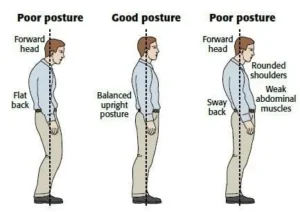
TOS is usually not caused by “something being out of place.”

Instead, it’s typically a load and space problem.

Contributing factors can include:

  • Forward head posture

  • Rounded shoulders

  • Poor scapular control

  • Tight anterior shoulder muscles

  • Repetitive overhead work

  • Heavy carrying

  • Previous trauma

Research in shoulder biomechanics (including work by Ludewig) shows that scapular positioning and movement influence how much space exists in this region.

In many cases, symptoms are position-dependent and load-dependent, which is good news — because that means they’re modifiable.


How is TOS diagnosed?

There is no single scan or test that “proves” neurogenic TOS.

Diagnosis is primarily clinical and based on:

  • Your symptom pattern

  • Reproduction of familiar symptoms with specific arm positions

  • Ruling out other causes such as cervical radiculopathy or peripheral nerve entrapment

Research reviews (such as those by Povlsen) confirm that diagnosis is based on a cluster of findings rather than one definitive test.

At Rx Physiotherapy, we perform:

  • Cervical spine assessment

  • Scapular movement analysis

  • Neural provocation testing

  • Strength and endurance testing

  • Vascular screening when indicated

Our priority is always to rule out serious causes first.


Can Physiotherapy help?

Yes — especially in neurogenic TOS.

Systematic reviews (e.g., Peek et al.) show that structured conservative rehabilitation can significantly improve symptoms in many patients.

Improvement rates reported in studies range between 50–90% in appropriate cases.


What does treatment involve?

At Rx Physiotherapy, treatment is structured and progressive.

🟢 Phase 1 – Calm the Irritation

  • Reduce aggravating positions

  • Modify overhead loading

  • Improve scapular positioning

  • Gentle mobility work

🔵 Phase 2 – Restore Control

  • Serratus anterior activation

  • Lower trapezius strengthening

  • Postural endurance training

  • Gradual reintroduction of overhead movement

🔴 Phase 3 – Build Capacity

  • Strength training

  • Overhead load tolerance

  • Work or sport-specific integration

TOS is rarely fixed with passive treatment alone.
Exercise-based rehabilitation is key.


When is surgery needed? ⚠️

Surgery is typically reserved for:

  • Confirmed vascular TOS

  • Structural compression (e.g., cervical rib)

  • Cases that fail structured conservative management

Guidelines from the Society for Vascular Surgery outline when surgical referral is appropriate.

Most neurogenic TOS cases improve with conservative management.


When should you seek assessment?

Book an assessment if you notice:

  • Persistent arm tingling or heaviness

  • Symptoms that worsen overhead

  • Swelling or colour changes in the arm

  • Unexplained weakness in the hand

Early assessment improves outcomes.


The good news ✅

Thoracic Outlet Syndrome can sound intimidating.

But in most cases, it is:

  • Load-related

  • Mechanically influenced

  • Responsive to targeted rehabilitation

With the right approach, symptoms can significantly improve.”
Share This article

Facebook
Twitter
LinkedIn

Category

Categories

Recent Articles

April-Patterson-rx-physiotherapy.png
Dr. April Patterson

Physiotherapist

Dr. April Patterson graduated from Bond University with a Doctor of Physiotherapy degree and founded RX Physiotherapy in 2019 with a vision to provide exceptional, personalised care. As a physiotherapist living with Ehlers-Danlos Syndrome (EDS), hypermobility, and Temporomandibular Joint (TMJ) issues, April brings a rare combination of personal insight and professional expertise to her practice. Her own experiences with these conditions fuel her passion for understanding and treating them, allowing her to empathise deeply with her patients and guide them with authenticity and compassion.

April has a huge passion for in EDS, Hypermobility Spectrum Disorders (HSD), and TMJ dysfunction, while also treating all joints and musculoskeletal conditions. She personally conducts initial assessments to understand each patient’s story, goals, and challenges before referring them to her highly skilled team for ongoing care. Her holistic, evidence-based approach blends manual therapy, strength and conditioning, pain management, and education to help clients regain function, confidence, and independence.

As Managing Director, April maintains the highest standard of care through weekly team sessions to review progress, provide guidance, and support professional development. This ensures that every patient receives structured, personalised care, while allowing her to focus on leadership, strategy, and advancing the clinic’s mission.

Outside the clinic, April enjoys hitting the gym, cooking, and spending quality time with her partner, her two dachshunds and two cats.

Ms. Emily Yorkston

Physiotherapist

Emily is a senior physiotherapist with extensive experience across musculoskeletal, neurological, orthopaedic, women’s health, and paediatric physiotherapy. She has worked in a wide range of clinical settings, including rural outreach programs and allied health leadership roles, which have shaped her holistic, collaborative, and genuinely client-centred approach to care.

Emily is a highly empathetic physiotherapist with lived experience of Ehlers-Danlos Syndrome (EDS), giving her a rare and deeply personal understanding of the physical, emotional, and day-to-day challenges faced by people living with complex and chronic conditions. She has a strong clinical interest in hypermobility (HSD, EDS), TMJ and jaw dysfunction and women’s health, and has completed APA Women’s Health Level 1 training. Emily is skilled in assessing and treating all joints and a broad range of musculoskeletal presentations, from everyday pain to complex, multi-system conditions.

She is passionate about helping clients achieve meaningful, sustainable, long-term outcomes. Emily combines personalised rehab programs, hands-on manual therapy, and targeted rehabilitation strategies to improve function, build confidence, and restore independence. Her care is structured, evidence-based, and highly individualised, ensuring every client feels informed, supported, and actively involved in their recovery.

Outside the clinic, Emily enjoys travelling and exploring new experiences, bringing fresh perspective and energy back into her work. She is known for her warm, calm, and motivating style, helping clients feel safe, understood, and empowered throughout their rehabilitation journey.

If you’re living with pain, recovering from injury, or navigating a complex condition such as EDS, HSD, TMJ dysfunction, women’s health concerns, or any musculoskeletal issue, you don’t have to do it alone. Book an appointment with Emily today to receive thoughtful, personalised care and take the next step toward moving with greater comfort, confidence, and trust in your body again.

profile-photo
Ms. Laura Flemming

Physiotherapist

Laura is a senior physiotherapist with six years of experience across hospital, private practice, community, and sports settings. She began her career at Wollongong Hospital before moving to Sydney, where she expanded her skills in musculoskeletal rehab, neurological rehab, and community-based care. During this time she became a Level 1 Strength and Conditioning Coach and worked with junior representative soccer teams in the St George region. Now back in the Illawarra, she’s excited to support her local community again.

Laura’s approach is grounded in understanding the individual—what they value, what they hope to achieve, and how their condition impacts their life. She focuses on meaningful outcomes through a blend of manual therapy, strength training, pain management, patient education, and personalised rehabilitation programs. Her experience spans acute and chronic injuries, post-operative rehab, strength and endurance training, falls prevention, and neurological conditions including stroke and brain injury.

She has a strong interest in working with people with Ehlers-Danlos Syndrome (EDS) and Hypermobility Spectrum Disorder (HSD), and she brings extensive experience supporting participants within the NDIS. She also specialises in treating TMJ/jaw dysfunction, helping clients reduce pain, improve mobility, and address the muscular and biomechanical factors contributing to their symptoms. Her calm, collaborative style helps clients feel understood, supported, and confident navigating long-term conditions.

Outside the clinic, you’ll find Laura hiking up mountains, writing music, playing soccer, or training for the occasional triathlon or running event.

Whether you’re managing pain, recovering from an injury, or navigating a complex condition like EDS, HSD, or TMJ dysfunction, Laura can help with all joints and musculoskeletal concerns, guiding you with structure, clarity, and genuine care.

Mr. Trent Cooksley

Physiotherapist

Trent is a physiotherapist who genuinely cares about people — the kind who listens properly, meets you where you’re at, and helps you feel comfortable from the moment you walk in. He has that big brother energy; calm, thoughtful, easy to talk to, and always looking out for you. His focus is simple — helping you move better, feel stronger, and get back to the things that matter to you, whether that’s training, sport, work, or living life without pain.

He treats a wide range of musculoskeletal conditions, including shoulder, knee, lower back, neck, and ankle injuries, and works with people of all ages and activity levels. Trent’s approach is hands-on, structured, and tailored to the individual. He’s not about quick fixes or generic programs — he takes the time to understand your body, your goals, and what’s been holding you back, then builds a clear plan to help you move forward with confidence.

Born and raised in Wollongong, Trent grew up immersed in sport. He played soccer with the Woonona Sharks and was involved in everything from tennis and golf to swimming, footy, cricket, and AFL. As a teenager, golf became his focus, earning him a place in the IAS Golf Program and later a college golf scholarship in Abilene, Texas. Experiencing injuries firsthand — and seeing how physiotherapy restored his performance — shaped the way he now supports others through injury, rehab, and long-term recovery.

Outside the clinic, Trent is easygoing, down-to-earth, and approachable. You’ll find him on the golf course, in the surf, or catching up with friends. That same calm, supportive energy carries into his sessions, helping clients feel at ease, understood, and supported every step of the way.

If you’re dealing with pain, injury, or ongoing frustration with your body, Trent is someone you can trust to have your back — and help you move with clarity, confidence, and strength again.

Mr. Harrison Smith

Physiotherapist

Harrison Smith holds a Master’s degree in Physiotherapy and brings over 10 years of clinical experience to his practice. His philosophy is simple: pain is rarely the real problem — it’s information. He often describes pain as a “check engine light” — a useful warning signal, but not always located where the actual fault exists.

Because of this, Harrison focuses on identifying the true cause of dysfunction rather than chasing symptoms. He performs detailed, full-body assessments to understand how the entire system is working together, then builds clear, targeted treatment plans designed for lasting change — not temporary relief.

His goal is to stand in your corner while you rebuild your body and confidence: reducing pain, addressing long-standing issues, improving body composition, and helping you reach meaningful performance goals. Ultimately, he aims to be the last practitioner you need by giving you both results and understanding.

Alongside Physiotherapy, Harrison has formal training in Sports & Exercise Science and Nutrition, allowing him to take a genuinely holistic approach to recovery and performance.

He has spent over a decade working within women’s sport, supporting teams from Gordon Rugby through to the Norwegian National Team, and has travelled internationally with the FRN Wolverines to Dubai.

Outside the clinic, Harrison lives what he teaches — surfing, freediving, strength training, and snow sports all shape his appreciation for movement efficiency, resilience, and real-world performance.

Mr-Reece-Nikitaras.png
Mr Reece Nikitaras

Physiotherapist

Reece Nikitaras is deeply passionate about optimising human movement and enhancing quality of life through targeted rehabilitation and evidence-based therapeutic techniques. His journey into physiotherapy was driven by a genuine desire to help individuals overcome physical barriers and reach their full potential.

As an avid runner, Reece brings both personal insight and clinical expertise to the treatment of running-related injuries. He is particularly dedicated to helping runners recover from injury, prevent future setbacks, and elevate their performance. Reece has developed a comprehensive running assessment protocol designed to identify biomechanical inefficiencies and areas of weakness, allowing for tailored interventions that support long-term improvement and injury prevention.

Reece also holds a strong clinical interest in knee rehabilitation, with an in-depth understanding of knee biomechanics and the complex nature of knee injuries. He implements highly specialised, results-driven treatment plans to restore function and accelerate recovery in clients dealing with knee concerns.

Always eager to stay at the forefront of his field, Reece consistently seeks out new knowledge and incorporates the latest advancements in physiotherapy research into his practice. His commitment to continuous learning ensures he delivers the highest standard of care to every patient.

Outside of the clinic, Reece enjoys travelling, spending time at the beach, and playing a round of golf.